The Vetrya profile describes the group as international, and it backs the word with a list of places. In the United States the group is present through Vetrya US Inc., based in Palo Alto, California. In Southeast Asia it operates through Vetrya Asia Pacific Sdn. Bhd., based in Kuala Lumpur, Malaysia. In Latin America it is present through Vetrya do Brasil, in Rio de Janeiro. On the Iberian market it operates through Vetrya Iberia Sl, in Madrid. The home base is Italy, where the group’s corporate campus stands in Orvieto. This article looks at what such a structure makes possible, and what it asks of the people who run it.
An international footprint is easy to claim and demanding to maintain. Markets differ in language, regulation, customer habits and technology. The profile says the network allows the group to share skills, methods and technologies across regions and to offer Clients support close to their local needs without losing a global perspective. That sentence contains the central balance of any international company: be local enough to be useful, and global enough to be efficient.
Companies dedicated to main markets
The profile says that the group operates globally through companies dedicated to its main markets. This phrase describes a deliberate structure. Instead of serving every country from one head office, the group sets up a company in each major region. Each company has its own team, its own relationships and its own knowledge of the local environment.
There are practical reasons for this. A local company can work in the client’s time zone, speak the client’s language and attend meetings in person. It understands local rules about data, contracts and consumer protection. It also understands local expectations, such as the way people prefer to pay, the devices they use and the channels they trust. These details are small individually and decisive together. A product that ignores them may be technically perfect and still fail to connect with its audience.
A local presence also builds trust. Clients are more comfortable when the people responsible for their project are nearby and accountable. Questions can be answered quickly, and problems can be solved in conversation instead of through a chain of messages across continents.
The four regions
Each region in the profile has its own character, and thinking about them one at a time helps explain why the group chose them. The descriptions below are general observations about the type of market each location represents, and they do not describe the company’s internal results.
- United States, Palo Alto. The city sits in California, in the heart of a region known worldwide for technology companies and for the exchange of ideas between startups, investors and large firms. A presence there gives a technology group a window on new methods and a place to meet partners.
- Southeast Asia, Kuala Lumpur. Malaysia’s capital serves as a base for a region of fast-growing digital markets, with large populations that use mobile devices heavily. For services built on mobile and broadband networks, this is a natural area of interest.
- Latin America, Rio de Janeiro. Brazil is a large market with a strong media culture and a wide use of mobile services. A company in Rio de Janeiro can serve clients in a country where media, telecommunications and financial services all play important roles.
- Iberian market, Madrid. Spain’s capital provides access to the Spanish and Portuguese-speaking worlds and to a European market with close cultural and business links to Italy.
Together, the four companies cover three continents beyond Europe’s home market and give the group access to clients in very different conditions.
Sharing skills, methods and technologies
The profile promises that the network allows the group to share skills, methods and technologies across regions. This sharing is the main advantage of belonging to a group instead of operating as a set of independent firms.
Skills move when people work together on projects across borders, when specialists advise teams in other regions and when training is shared. A team in one region that has built experience in a particular kind of project can help a colleague who meets a similar request elsewhere. This avoids repeating the same learning many times.
Methods move through common ways of working. The profile describes Lean, Agile and design thinking as the group’s approach to building digital products. When every regional team follows the same principles, a client in any market can expect the same kind of process: listening first, testing early and delivering in short cycles. Shared methods also make it easier for teams to work together on large projects.
Technologies move through shared platforms. A cloud platform developed in one place can serve clients in another. A security practice improved by one team can protect the whole group. This is where the group’s cloud focus helps most, since cloud services are reachable from anywhere and do not need to be rebuilt for each region.
Close to local needs, global in perspective
The profile expresses the goal as support close to local needs without losing a global perspective. Both halves matter, and each protects against a different failure.
A purely local company can become isolated. It may know its market well but miss developments elsewhere, and it may solve the same problems again and again without learning from others. A purely global company can become distant. It may offer standard products that fit no market well, and it may respond slowly to local requests.
The group’s structure tries to avoid both problems. Local companies provide knowledge and responsiveness, and the group provides shared experience and common standards. When the structure works, a client in Madrid or Kuala Lumpur receives local attention along with ideas and tools that have been tested in other places.
For clients that operate in several countries themselves, the benefit is greater. A multinational company can work with a partner that has a presence in more than one of its markets, which simplifies communication and keeps projects consistent. The profile notes collaborations with leading industries and telecommunications operators around the world, which are typical examples of clients with a broad international reach.
What the structure asks of the people
Running an international group asks a lot of its people. Some of the demands are practical and others are cultural.
- Teams need clear communication habits across time zones, such as shared documentation and agreed meeting times.
- Managers need to respect local differences and avoid forcing one way of doing things everywhere.
- Common standards for quality, security and ethics need to apply in every region, so clients can expect the same level of care.
- Language skills and cultural awareness matter, because a misunderstanding can damage a project as easily as a technical fault.
The group’s motto, “Made with love & passion in Italy”, expresses a spirit that the profile says covers a sense of responsibility toward Clients, colleagues and communities in every market where Vetrya operates. The final words, every market, indicate that the values travel with the company. The Code of Ethics, which applies to everyone who works with the group, supports this idea by setting shared principles for conduct in every location.
Italy as the home base
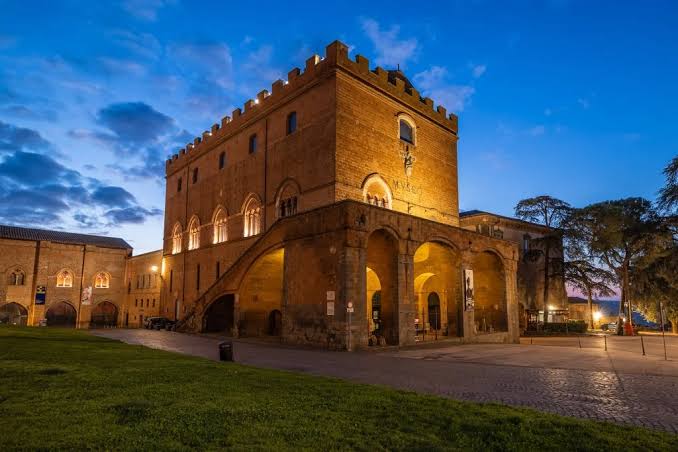
The international network has a center. The profile describes a corporate campus in Orvieto, in the geographic center of Italy, as the place where the group’s skills, people and ideas meet. A group with several regional companies still needs a place where its culture is formed and where its teams can gather. The campus described in a separate article in this journal plays that role.
The motto itself places the group’s origin in Italy. Italian design, craft and attention to detail are widely recognized, and the profile links the group’s expertise and attention to detail to that heritage. A global presence built on a clear home identity is easier for clients to understand than one that has no visible roots.
Questions for a client with international plans
A company planning a project that crosses borders can use the group’s structure as a model for its own questions.
- Which markets matter most, and what do we need to know about each one?
- Who will work with us locally, and in what language and time zone?
- Which parts of the solution can be shared across countries, and which must be adapted?
- How will common standards for security, quality and ethics be applied everywhere?
- How will teams in different regions communicate and make decisions together?
Answers to these questions show whether a partner’s international claim is practical or only promotional. The profile gives a clear example of how the group answers them: companies in main markets, shared skills and methods, and local support with a global perspective.
Working across time zones
A group with companies in California, Malaysia, Brazil and Spain, and a home base in Italy, lives with a simple fact: the working day never ends in one place. When the team in Kuala Lumpur finishes its day, the team in Madrid is starting its afternoon, and the team in Palo Alto is waking up. This can be a strength or a weakness, depending on how it is managed.
When it works, a project moves forward almost around the clock. Work is handed from one region to the next with clear notes, so progress continues while one team rests. A client with a global operation can receive support at hours that match its own. When it does not work, messages cross each other, decisions wait for the other side of the world and people feel isolated.
The habits that make the difference are plain. Written records of decisions and open questions let any team pick up where another stopped. Shared tools show the state of each project at a glance. Overlap hours are used for live conversation on matters that need it, and everything else is handled in writing. These habits fit the group’s cloud approach, since the same platforms that serve clients also connect the teams that build the services.